

There are many articles, papers and books on different tribological subject areas written by experts within Neale Consulting Engineers and Brookes Bell. Below is a selection:
The Tribology Handbook
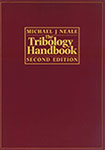
Author: M.J. Neale
The Tribology Handbook 2nd edition follows the pattern of the original, which was first published in the 1970s. It provides instant access to essential information on the performance of tribological components and is aimed particularly at designers and engineers in industry. The book is configured like an “atlas” to enable quick and logical access to the information required by the user.
A Tribology Casebook
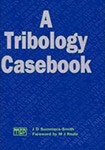
Author: Denis Summers-Smith
This book is different as it describes what actually happens under real life operating conditions. By presenting a collection of incidents drawn from practice, this book illustrates the practical issues and problem-solving approaches needed to deal with real situations that engineers are likely to come across in their working lives.
Mechanical Seal Practice

Author: Denis Summers-Smith
A joint study of mechanical seal performance. It deals with seal design, materials and selection, pump design and its effect on seal performance.
Bearings
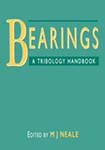
Author: M.J. Neale
This handbook gives practical guidance on bearings in a form intended to provide easy and rapid reference.
Couplings and Shaft Alignment
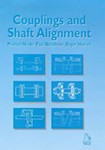
Author: Denis Summers-Smith
Couplings and Shaft Alignment is concerned with the various types of flexible coupling which can be used to transmit power between the shafts of rotating machines, and with the alignment of those shafts.
Component Failures
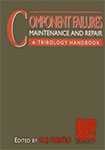
Author: M.J. Neale
This handbook gives practical guidance on component failures, maintenance and repair in a form intended to provide easy and rapid reference.
Drives & Seals
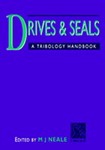
Author: M.J. Neale
This handbook gives practical guidance on drives and seals in a form intended to provide easy and rapid reference.
Engineering Measurements
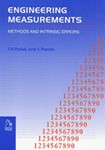
Author: T. A. Polak and C. Pande
Methods and Intrinsic errors provides a valuable insight into the equipment and methods generally used in taking measurements, and helps engineers avoid or minimise the inaccuracies that can arise even when using highly accurate instruments.
Flexible Couplings
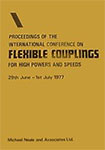
Author: M.J. Neale
These studies were aimed at producing a practical summary of the current technology of flexible couplings for use in the selection, design, performance estimation, and specification for use in Power Stations.
Condition Monitoring of Machinery
Author: M.J. Neale
The purpose of this guide is to help industrial companies decide whether condition monitoring could with advantage be applied to their equipment; to indicate what its application would involve; and to give some idea of the financial savings to be expected.
Lubrication
Author: M.J. Neale
The field of lubricants and lubrication is presented in this book in a logical and comprehensive manner, and data is arranged to enhance its value to practitioner and researcher alike.
Piston Ring Design
Author: M.J. Neale
A survey of information from research on piston rings and its application to design.
Precision Forming
Author: M.J. Neale
This report constitutes the starting point in the definition of proposals for a co-ordinated programme of research and development into the technology of precision forming.
An Introductory Guide to Industrial Tribology
Author: J.D. Summers-Smith
The main emphasis of this book is on the practical aspects of lubrication and wear as they affect the engineer.
Lubrication and Reliability Handbook
Author: M.J. Neale
This handbook will assist engineers in industry with the operation and maintenance of machinery it provides the information that these engineers need in a form that is instantly accessible and easy to read.
The Tribology Handbook (Extracts)
Author: M.J. Neale
Download extracts from the Tribology Handbook here. These sample pages from the Tribology Handbook cover failure analysis of various component types, also design and selection criteria, and lubrication. If you cannot find what you are looking for, please contact us and we will be happy to advise.
If you’re keen to find out more about tribology and how it can help you, speak to the Brookes Bell team today.