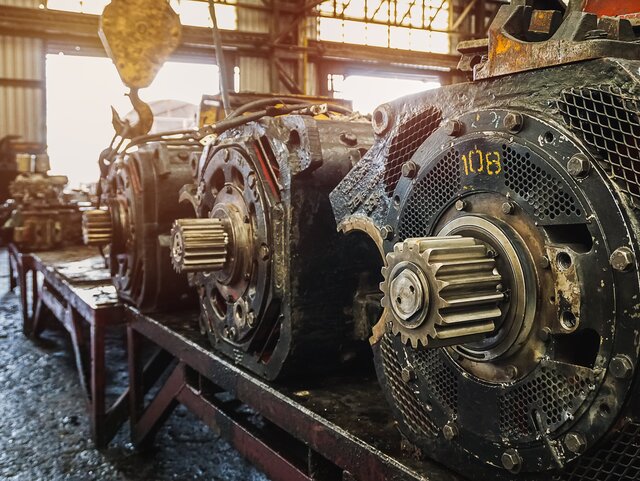

Failure analysis
Why did a piece of machinery, a component, or asset fail, or wear out prematurely?
These are just a few of the questions that we seek to answer when you commission us to provide failure analysis consultancy.
Our process begins with the collection of technical information and failure history. This is followed by the examination of failure evidence and the reconstruction of the likely sequence of events leading to failure.
From there, our tribologists are able to determine a series of possible causes - which are examined in more detail in order to identify the main root cause of the failure.
Wherever possible, we conduct failure analysis investigations on-site, however remote analysis is sometimes also possible using scientific, photographic, video, and descriptive evidence.
Design evaluation and re-design
Are you unsure if a design may lead to tribology-related issues? Are you having an issue with a design which is already in service?
Our design evaluation and re-design service involves carrying out audits on designs (be they new or existing designs). We can also assist clients to overcome development problems with new products or help them to improve the efficiency and reliability of existing products.
Expert witness work and arbitration
We are often called upon to act as expert witnesses for litigation purposes, both in the UK and overseas and have given evidence many times in court cases, arbitrations, and mediations.
Cases will typically focus on machinery failures or deficiencies - however, we have also been involved in litigation regarding patent disputes and project disputes where the mechanical engineering aspect is a core issue.
Our specialist expertise is in tribology and machinery design, but our investigations and our reporting frequently include other engineering aspects, such as metallurgy, vibration, metal fatigue, maintenance etc. All areas in which we, as specialist mechanical engineers, have familiarity and knowledge.
In addition to machine failure disputes, we have also given evidence in patent disputes involving machinery, and also personal injury and accident cases.
Our advice and opinion is based on engineering interpretation of the facts. The duty of the expert witness is to assist the court, and to provide an impartial and unbiased opinion.
The majority of our assignments do not proceed to a hearing, but are settled, often after the exchange of expert reports. We encourage clients to engage us early in the dispute to provide an initial technical opinion, which can help in resolving the case.
Examples of our work
A few examples of expert witness assignments are listed below, illustrating the diversity of investigations that we have carried out. If a matter involves machinery, large or small, we can probably help.
- Building hoist fatal accident
- Ship main engine crankcase explosion
- Fairground machinery accidents
- Disputed performance of a scrap metal processing plant
- Aircraft crash investigations
- Patent dispute on a cosmetic hair removal device
- Destruction by fire of an industrial shredder machine
- Metal particle found in packaged food product
- Disputed repair costs on a large industrial gearbox
- Reliability and safety of refuse lorries
- Failures of conveyor drive gearboxes
- Failures of ship propeller shaft bearings
Contact us today for a no-obligation conversation about your tribology requirements.